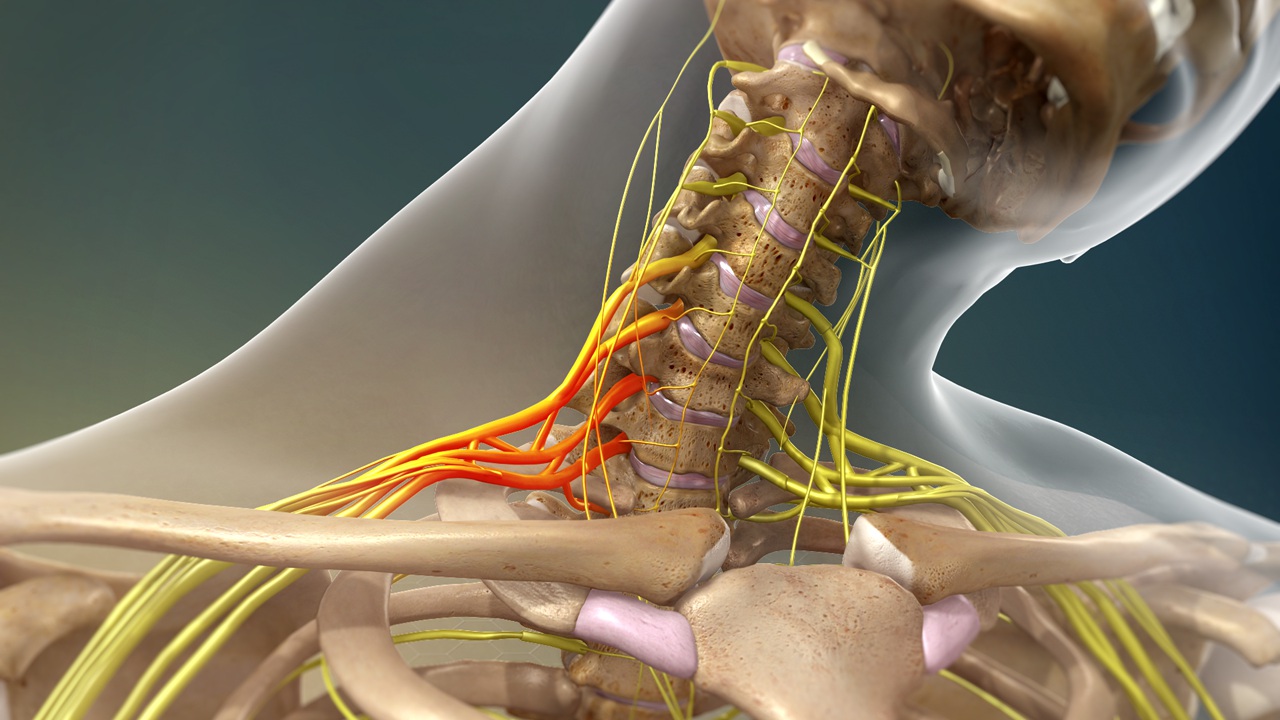
A brachial plexus lesion is a condition where the brachial plexus is damaged or torn, the network of nerves that connects the neck and shoulders to the spinal cord. This condition is generally caused by trauma such as traffic accidents, falls, sports injuries, childbirth complications, or pressure from tumors. [1]. Based on their severity, brachial plexus lesions can be divided into three degrees: mild, moderate, and severe (avulsion). In mild cases (neuropraxia), the nerve is only slightly pulled without tearing and generally heals spontaneously. Symptoms may include tingling, numbness, or an electric shock-like sensation. In moderate cases (neuroma), the nerve is partially torn, and the body forms scar tissue as a healing response. This scar tissue can compress the nerve and impair function. This condition can progress to a complete tear, but the nerve root remains attached to the spinal cord. In severe cases (avulsion), the nerve root is completely detached from the spinal cord, causing more serious functional impairment. [2].
Treatment of brachial plexus lesions includes conservative therapy such as physiotherapy and physical exercise, as well as surgical intervention in cases with nerve tears, including nerve grafting. nerve transfer, or muscle transfer [3]. Furthermore, the development of stem cell-based regenerative therapies shows promising potential in supporting nerve function recovery and improving symptoms. Approaches using mesenchymal stem cells (MSCs) and their derivatives, such as secretome, have been reported to improve motor function in patients, resulting in improved ability to perform daily activities and tasks. Clinical studies are also evaluating the combination of stem cell therapy with nerve transfer, which theoretically could provide more optimal results than either therapy alone. [4]. Meskipun demikian, penerapan terapi ini tetap memerlukan evaluasi klinis yang ketat serta persetujuan tindakan medis berdasarkan informed consent yang jelas dan komprehensif.
Now, stem cell therapy services for orthopedic cases, especially brachial plexus lesion conditions, can be carried out based on the Decree of the Minister of Health of the Republic of Indonesia (KMK) number HK.01.07/MENKES/1359/2024 concerning Guidelines for the Implementation of Stem Cell Therapy Services in the Field of Orthopedics and Traumatology.
ProSTEM is here to provide stem cells and secretome Produced in a facility licensed by the Food and Drug Authority (BPOM) and the Ministry of Health, ProSTEM demonstrates its dedication to quality and safety standards. We ensure that every therapeutic service provided is safe, effective, and complies with all medical regulations and government requirements for patient safety. To find out more information about stem cell therapy services for brachial plexus lesions, please contact us via WhatsApp on this website.
References
- Luo, T. D., Levy, M. L., & Li, Z. (2023). Brachial plexus injuries. StatPearls – NCBI Bookshelf. https://www.ncbi.nlm.nih.gov/books/NBK482305/
- Kaiser, R., Mencl, L., & Haninec, P. (2012). Injuries associated with serious brachial plexus involvement in polytrauma among patients requiring surgical repair. Injury, 45(1), 223–226. https://doi.org/10.1016/j.injury.2012.05.013
- Sumarwoto, T., Suroto, H., Mahyudin, F., Utomo, D. N., Hadinoto, S. A., Abdulhamid, M., Utomo, P., Romaniyanto, R., Prijosedjati, R. A., & Rhatomy, S. (2021). Brachial plexus injury: Recent diagnosis and management. Open Access Macedonian Journal of Medical Sciences, 9(F), 13–24. https://doi.org/10.3889/oamjms.2021.5578
- Widodo, W., Dilogo, I. H., Kamal, A. F., Antarianto, R. D., Wuyung, P. E., Siregar, N. C., Octaviana, F., Kekalih, A., Suroto, H., Latief, W., & Hutami, W. D. (2024). Functional outcome and histologic analysis of late onset total type brachial plexus injury treated with intercostal nerve transfer to median nerve with local umbilical cord-derived mesenchymal stem cells or secretome injection: a double-blinded, randomized control study. European Journal of Orthopaedic Surgery & Traumatology, 34(8), 4073–4082. https://doi.org/10.1007/s00590-024-04110-6