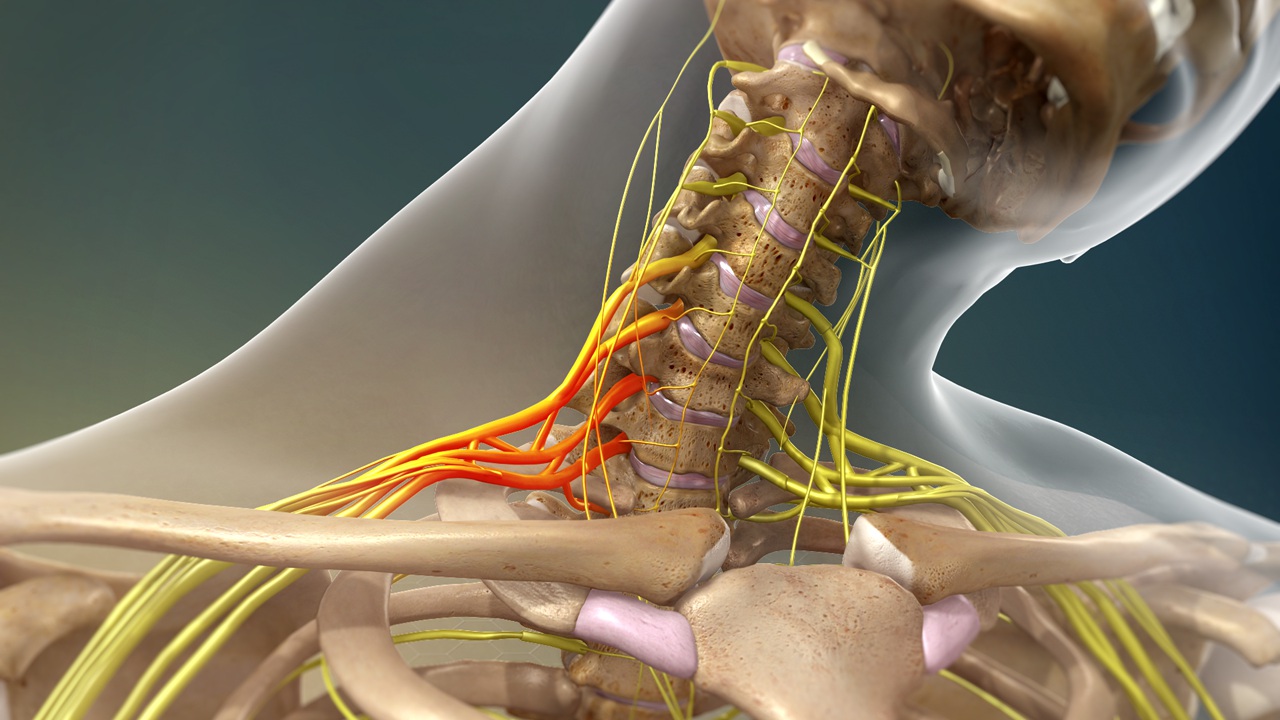

Spondyloarthritis or Spondyloarthritis is a group of chronic inflammatory diseases that primarily affect the joints of the spine and pelvis, especially the sacroiliac joints, so that one of the earliest and most common symptoms is chronic low back pain that worsens at rest.[1]This disease is an autoimmune disorder that can progress if not treated properly. The exact cause of spondyloarthritis is unknown, but genetic factors play a significant role, particularly the presence of the HLA-B27 gene, which is found in most patients.[2]However, not all individuals with this gene will develop the disease, suggesting an interaction between genetic and environmental factors such as lifestyle, vitamin D deficiency, a history of certain infections, and physical trauma, which can trigger an abnormal immune response and lead to chronic inflammation of the joints and surrounding tissues.
Clinically, spondyloarthritis is divided into axial spondyloarthritis (axSpA) which primarily affects the spine and sacroiliac joints, as well as peripheral spondyloarthritis affecting joints outside the spine such as the knees, ankles, or elbows, where peripheral manifestations can contribute significantly to the overall level of disease activity.[3]The severity of the disease is assessed based on the intensity and frequency of pain, the level of stiffness, especially in the morning, limitations in mobility, and the possibility of structural complications in the spine. In addition to lower back pain, other symptoms that may appear include body stiffness, chest pain due to costal joint involvement, urinary tract disorders, psoriasis of the skin, gastrointestinal disorders, and chronic fatigue, indicating that spondyloarthritis is a systemic inflammatory disease with diverse clinical manifestations.[4].
To date, there is no definitive cure for spondyloarthritis, so therapy focuses on controlling inflammation, reducing pain, preventing disease progression, and maintaining joint function and the patient's quality of life. Therapeutic approaches include a combination of non-pharmacological therapies such as physiotherapy and lifestyle modifications, as well as pharmacological therapies using non-steroidal anti-inflammatory drugs (NSAIDs) and biologic drugs such as TNF-α. inhibitors, and the latest molecular target therapies that have undergone clinical trials and shown significant progress in management. axial spondyloarthritis[5]However, considerations regarding long-term effectiveness, safety, cost, and accessibility remain important factors in the widespread implementation of the therapy.
Along with the development of regenerative medicine, stem cell therapy (stem cell therapy) is one of the approaches being researched for this chronic inflammatory condition, particularly the use of mesenchymal stem cells derived from the umbilical cordUC)MSCs are known to have immunomodulatory and anti-inflammatory properties and have the potential to support tissue repair. Preliminary studies have reported that umbilical cord MSC infusions may help reduce symptoms in patients with ankylosing spondylitis, a form of spondyloarthritis.[6]. In addition to the use of whole cells, derivative products in the form of secretome containing bioactive factors secreted by stem cells also show potential in helping reduce chronic inflammation and supporting tissue regeneration, although this approach still requires further research to ensure long-term safety and effectiveness.
Now, stem cell therapy services for orthopedic cases, especially spondyloarthritis conditions, can be carried out based on the Decree of the Minister of Health of the Republic of Indonesia (KMK) number HK.01.07/MENKES/1359/2024 concerning Guidelines for the Implementation of Stem Cell Therapy Services in the Field of Orthopedics and Traumatology.
ProSTEM is here to provide stem cells and secretome Produced in a facility licensed by the Food and Drug Authority (BPOM) and the Ministry of Health, ProSTEM demonstrates its dedication to quality and safety standards. We ensure that every therapy service we provide is safe, effective, and complies with all medical regulations and government requirements for patient safety. To find out more information about stem cell therapy for spondyloarthritis, please contact us via WhatsApp on this website.
References
- Cleveland Clinic. (2024). Spondyloarthritis (spondyloarthropathy). https://my.clevelandclinic.org/health/diseases/spondyloarthritis-spondyloarthropathy
- Del Río-Martínez, P. S. (2016). Spondyloarthritis: pathogenesis, clinical manifestations, diagnosis, and management. European Medical Journal, 96–102. https://doi.org/10.33590/emj/10314414
- De Winter, J. J., Paramarta, J. E., De Jong, H. M., Van De Sande, M. G., & Baeten, D. L. (2019). Peripheral disease contributes significantly to the level of disease activity in axial spondyloarthritis. RMD Open, 5(1), e000802. https://doi.org/10.1136/rmdopen-2018-000802
- Rojas-Vargas, M., Muñoz-Gomariz, E., Escudero, A., Font, P., Zarco, P., Almodovar, R., Gratacos, J., Mulero, J., Juanola, X., Montilla, C., Moreno, E., Collantes-Estevez, E., & Group, O. B. O. R. W. (2009). First signs and symptoms of spondyloarthritis–data from an inception cohort with a disease course of two years or less (REGISPONSER-Early). Lara D. Veeken, 48(4), 404–409. https://doi.org/10.1093/rheumatology/ken506
- Kaltsonoudis, E., Karagianni, P., Memi, T., & Pelechas, E. (2025). State-of-the-Art Review on the Treatment of Axial Spondyloarthritis. Medical Sciences, 13(1), 32. https://doi.org/10.3390/medsci13010032
- Li, A., Tao, Y., Kong, D., Zhang, N., Wang, Y., Wang, Z., Wang, Y., Wang, J., Xiao, J., Jiang, Y., Liu, X., & Zheng, C. (2017). Infusion of umbilical cord mesenchymal stem cells alleviates symptoms of ankylosing spondylitis. Experimental and Therapeutic Medicine, 14(2), 1538–1546. https://doi.org/10.3892/etm.2017.4687