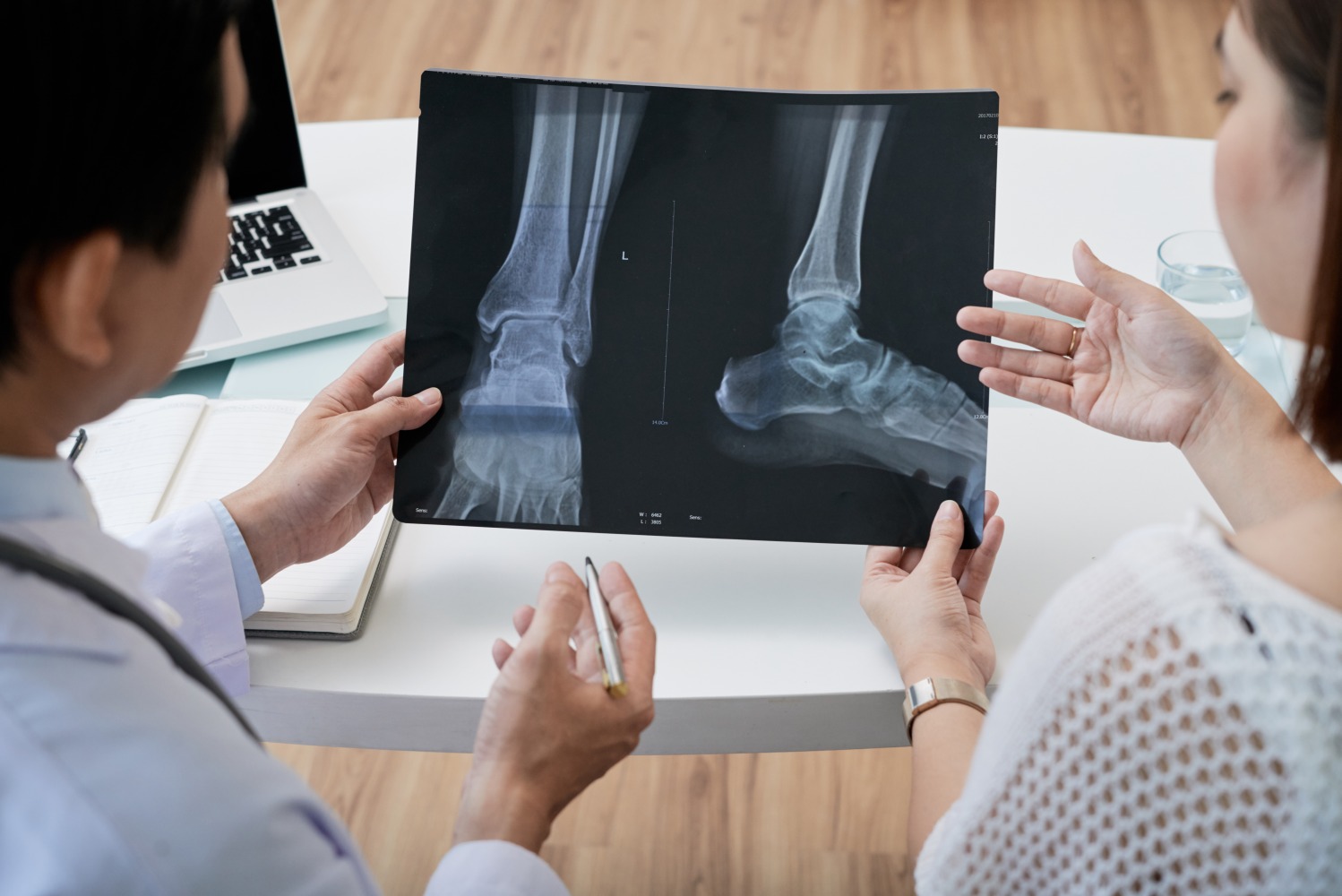
An anterior cruciate ligament (ACL) injury is a tear or strain in one of the ligaments in the knee that maintains joint stability during movement. Tears can occur suddenly due to a change in direction of movement, an awkward landing after a jump, or a direct impact to the knee. This condition is common in athletes and active individuals who engage in intense physical activity. [1,2].
Symptoms of an ACL injury usually appear immediately after the injury, characterized by intense pain, rapid swelling, and difficulty bearing weight. In some cases, a "pop" sound can be heard when the injury occurs. [3]ACL injuries are divided into three degrees of severity: mild, which begins with a stretching of the ligament. The second degree is moderate, where the ligament has torn 20-80%, causing moderate pain, swelling, and mild instability. The final degree is severe, where the ligament has completely torn, causing significant knee instability. [4].
Treatment for ACL injuries can be performed through non-surgical (conservative) or operative approaches. Non-surgical therapies include RICE therapy (Rest, Ice, Compression, Elevation), physical therapy that focuses on strengthening the muscles around the knee, and knee braces to maintain stability during the healing process followed by taking nonsteroidal anti-inflammatory drugs. (NSAIDs) for pain relief. Non-surgical treatment and management methods are generally performed when the patient's condition is still at stage one or two. For stage three, surgery, such as ligament reconstruction using special biological materials, is required. [5].
As medical technology advances, stem cell-based therapies are being developed as a regenerative approach to aid tissue healing. Research shows that mesenchymal stem cells (MSCs) obtained from umbilical cords and their derivatives, secretome, have the ability to accelerate tissue regeneration, reduce inflammation, and support the repair of damaged ligament structures. While initial research results are promising, further clinical evaluation of this therapy is needed to ensure its long-term safety and effectiveness. [6,7].
Currently, the use of MSCs as an adjunct therapy for ACL injuries continues to be researched and developed. In Indonesia, the use of stem cell-based therapy must comply with applicable regulations and can only be performed in healthcare facilities that have official permits from the Ministry of Health and the Food and Drug Monitoring Agency (BPOM). Now, stem cell therapy services for orthopedic cases, specifically ACL injuries, can be implemented based on the Decree of the Minister of Health of the Republic of Indonesia (KMK) Number HK.01.07/MENKES/1359/2024 concerning Guidelines for the Implementation of Stem Cell Therapy Services in the Field of Orthopedics and Traumatology.
ProSTEM is here to provide stem cells and secretome Produced in a facility licensed by the Food and Drug Authority (BPOM) and the Ministry of Health, ProSTEM demonstrates our dedication to quality and safety standards. We ensure that every therapeutic service we provide is safe, effective, and complies with all medical regulations and government requirements for patient safety. For more information about stem cell therapy for anterior cruciate ligament injuries, please contact us via WhatsApp on this website.
References
- Evans, J., Mabrouk, A., & Nielson, J. L. (2023). Anterior cruciate ligament knee injury. StatPearls – NCBI Bookshelf. https://www.ncbi.nlm.nih.gov/books/NBK499848/
- Ristic, Vladimir; Ninkovic, Srdjan; Harhaji, Vladimir; Milankov, Miroslav. (2010). Causes of anterior cruciate ligament injuries. Medicinski pregled, 63(7-8), 541–545. doi:10.2298/MPNS1008541R
- Mayo Clinic Staff. (2022). ACL injury: Symptoms and causes. Mayo Clinic. https://www.mayoclinic.org/diseases-conditions/acl-injury/symptoms-causes/syc-20350738
- Sports Orthopedics Institute. (2025). ACL tear grades explained: Types, symptoms & best treatment. Sports Orthopedics. https://sportsorthopedics.in/acl-tear-grades-explained
- Shom, P., Varma, A. R., & Prasad, R. (2023). The anterior cruciate ligament: Principles of Treatment. Cureus, 15(6), e40269. https://doi.org/10.7759/cureus.40269
- Mulyo, A., Qlintang, S., Murti, H., Lubis, V. K., Sihombing, I. N. N., Fatimah, A., & Nabila, M. (2025). Effect of Umbilical Cord-Mesenchymal Stem Cells (UC-MSCs) Derived Secretome Combined with UC-MSCs in Anterior Cruciate Ligament Tear: A Case Report. Indonesian Journal of Physical Medicine and Rehabilitation, 14(2), 245–251. https://doi.org/10.36803/indojpmr.v14i2.493
- Rhatomy, S., Prasetyo, T. E., Setyawan, R., Soekarno, N. R., Romaniyanto, F., Sedjati, A. P., Sumarwoto, T., Utomo, D. N., Suroto, H., Mahyudin, F., & Prakoeswa, C. R. S. (2020). Prospect of stem cells conditioned medium (secretome) in ligament and tendon healing: A systematic review. Stem Cells Translational Medicine, 9(8), 895–902. https://doi.org/10.1002/sctm.19-0388