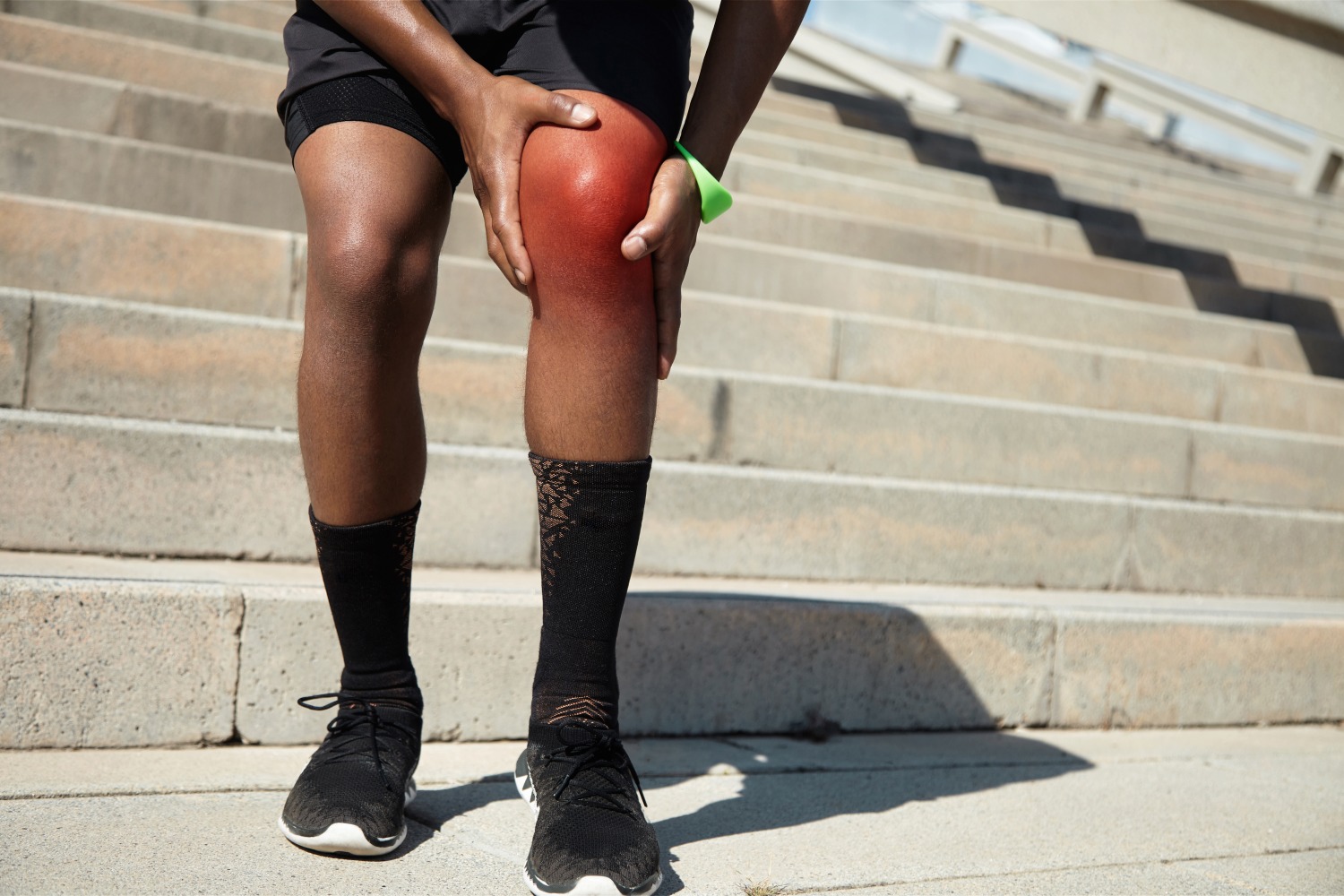
Osteochondral lesions are damage to the joint cushion and underlying subchondral bone, most commonly occurring in the ankle and knee joints. The causes of this condition are generally divided into two main groups: acute trauma and osteochondritis dissecans (OCD). Sudden injury from sports or direct impact can cause cracks in the cartilage and underlying bone. Meanwhile, in OCD, part of the bone beneath the cartilage experiences a disruption in its blood supply, causing the tissue to weaken and become dislodged, forming a lesion. In addition to these two factors, this condition can also be influenced by repeated injury, wrist joint weakness, and genetic factors. [1].
Symptoms that often appear include joint pain during activity or lifting weights, swelling, and joint stiffness. [2]Osteochondral lesions can be managed through both non-surgical and surgical approaches. Non-surgical therapies include the administration of nonsteroidal anti-inflammatory drugs (NSAIDs) to reduce pain and inflammation, physiotherapy, and intra-articular injections such as steroids or hyaluronic acid. In certain cases, surgical procedures are necessary, such as debridement and bone drilling to stimulate healing, fixation of joint fragments, and cartilage transplantation using the patient's own or donor tissue. In addition, stem cell-based therapies are emerging as an alternative regenerative therapy. [3].
Currently, stem cell therapy shows promising potential in assisting bone and cartilage tissue repair while reducing inflammation. This approach has the potential to reduce the need for reoperation and the risk of long-term complications. One type of cell widely used is mesenchymal stem cells (MSCs), which can be obtained from, among other sources, the umbilical cord. Stem cell-derived products, such as secretome, are also attracting attention because they contain various bioactive factors with relatively low risks and broad regenerative benefits. This therapy can be used alone or in combination with other medical approaches as clinically indicated. [4,5].
In Indonesia, stem cell therapy services in the field of orthopedics, including osteochondral lesions, have a regulatory basis through the Decree of the Minister of Health of the Republic of Indonesia Number HK.01.07/MENKES/1359/2024 concerning Guidelines for the Implementation of Stem Cell Therapy Services in the Field of Orthopedics and Traumatology.
ProSTEM provides stem cell and secretome therapy services produced in facilities licensed by Good Manufacturing Practices (CPOB) and in compliance with regulatory requirements from the Ministry of Health and the Food and Drug Authority (BPOM). All services are conducted with a focus on quality and safety standards to ensure safe, effective, and compliant therapies. Further information regarding stem cell therapy services for osteochondral lesions can be obtained through the contact information provided on this website.
References
- Bruns, J., Habermann, C., & Werner, M. (2021). Osteochondral Lesions of the Talus: A Review on Talus Osteochondral Injuries, Including Osteochondritis Dissecans. Cartilage, 13(1_suppl), 1380S-1401S. https://doi.org/10.1177/1947603520985182
- American Orthopaedic Foot & Ankle Society. (2026). Osteochondral lesion. FootCareMD. https://www.footcaremd.org/foot-and-ankle-conditions/ankle/osteochondral-lesion
- Badekas, T., Takvorian, M., & Souras, N. (2013). Treatment principles for osteochondral lesions in foot and ankle. International Orthopaedics, 37(9), 1697–1706. https://doi.org/10.1007/s00264-013-2076-1
- Song, J., Hong, K., Kim, N., Jung, J., Park, H., Kim, Y., Shetty, A. A., & Kim, S. J. (2019). Allogenic umbilical cord blood-derived mesenchymal stem cells implantation for the treatment of juvenile osteochondritis dissecans of the knee. Journal of Clinical Orthopaedics and Trauma, 10(Suppl 1), S20–S25. https://doi.org/10.1016/j.jcot.2019.03.025
- Cadelano, F., Giannasi, C., Rossi, N., Della Morte, E., Niada, S., Talò, G., Mistretta, D. A., Moretti, M., Peretti, G. M., Mangiavini, L., & Brini, A. T. (2026). Evaluation of MSC‐Secretome effects in an ex vivo compartmentalized osteochondral interface model. Stem Cells International, 2026(1), 3275855. https://doi.org/10.1155/sci/3275855