Keloids and hypertrophic scars are abnormal scars that form on the skin's surface due to excessive collagen production during wound healing. Although they appear similar clinically, these two types of scars have distinct biological properties and morphological characteristics.
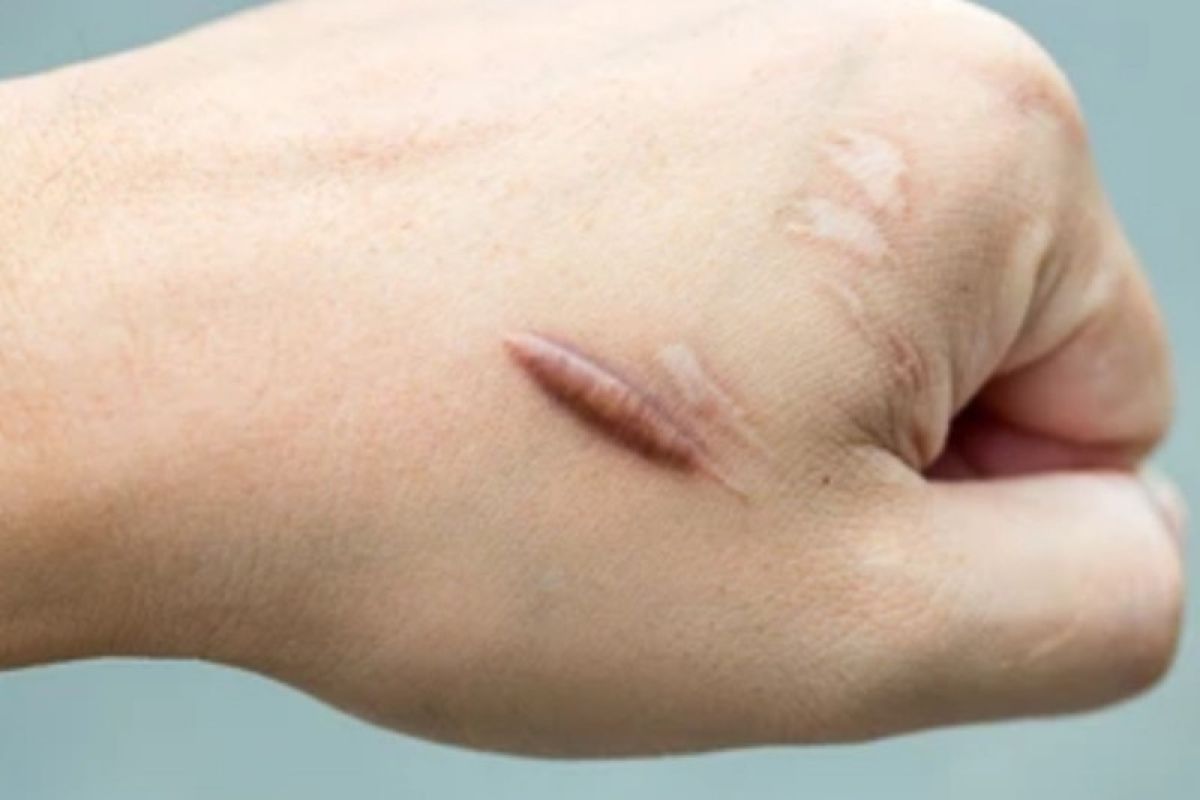
Keloids are thickened scars that grow aggressively and extend beyond the original wound, and can be genetically inherited. Clinically, keloids can be larger than the original wound and darker in color, such as dark brown, purple, or shiny dark red.
Hypertrophic scars are thickened scars that grow within the boundaries of the original wound, feel hard, often cause itching and generally do not have a genetic predisposition. Morphologically, hypertrophic scars have a size and width that is relatively the same as the original wound, have a soft or rubbery texture, and are usually pink or red in color which will gradually fade and approach the color of the surrounding skin over time [1].
Both of these scars can be treated with various therapeutic methods, such as intralesional corticosteroid injections, use of silicone sheets, cryotherapy, laser therapy, and surgical procedures. Keloids are known to be more difficult to treat than hypertrophic scars because they have higher biological activity in producing collagen and a tendency to be resistant to the programmed cell death process [2].
Both of these scars can be treated with various therapeutic methods, such as intralesional corticosteroid injections, use of silicone sheets, cryotherapy, laser therapy, and surgical procedures. Keloids are known to be more difficult to treat than hypertrophic scars because they have higher biological activity in producing collagen and a tendency to be resistant to the programmed cell death process [2].
In recent years, stem cell therapy has been especially used Mesenchymal Stem Cell (MSC) is known to have superior benefits and potential in the treatment of hypertrophic scars. and keloids. The potential and advantages of this therapy are related to the ability of stem cells to produce various biological molecules that can play a role in reducing the inflammatory process and reducing the expression of cytokines, such as Transforming Growth Factor-beta 1 (TGF-β1), which is known to play an important role in the formation of keloids and hypertrophic scars [3].
Now, stem cell therapy services in reconstructive and aesthetic plastic surgery cases, especially in the treatment of keloids and hypertrophic scars, can be carried out based on Decree of the Minister of Health of the Republic of Indonesia Number HK.01.07/MENKES/1200/2025 concerning Guidelines for the Implementation of Cell and/or Stem Cell Therapy Services in the Field of Reconstructive and Aesthetic Plastic Surgery.
Dengan bekal data klinis yang tersedia, ProSTEM hadir menyediakan produk sel punca dan turunannya yang diproduksi di fasilitas berizin sesuai standar Cara Pembuatan Obat yang Baik (CPOB) dari Badan Pengawas Obat dan Makanan (BPOM) serta memiliki Izin dari Kementerian Kesehatan Republik Indonesia. Hal ini menunjukan dedikasi ProSTEM dalam menerapkan standar mutu dan keamanan. ProSTEM memastikan setiap layanan terapi yang diberikan mengutamakan aspek keamanan, efektivitas, serta kepatuhan seluruh regulasi medis dan ketentuan pemerintah demi keselamatan pasien. Untuk menemukan informasi lebih lanjut terkait layanan terapi sel punca dan turunannya pada yang berasal dari tali pusar (UC)), serta produk turunannya seperti secretome penanganan keloid dan bekas luka hipertrofik, silakan menghubungi kontak WhatsApp yang tersedia pada situs website ini.
References
- Kazemeini, S., Nadeem-Tariq, A., Hajian, P., Anil, B., Easterly, J., Sraa, K., Pokharel, S., Metellus, R., & Kazemeini, M. (2025). Hypertrophic and keloid scar management: Advances in diagnosis, perioperative care, and anesthetic modulation. Cureus, 17(7), e88810. https://doi.org/10.7759/cureus.88810
- Gauglitz GG. Management of keloids and hypertrophic scars: current and emerging options. Clin Cosmet Investig Dermatol. 2013 Apr 24;6:103-14. doi: 10.2147/CCID.S35252. PMID: 23637546; PMCID: PMC3639020.
- Salsabila, S. D. (2025). Hypertrophic scar or keloid treatment using secretome (human umbilical cord Wharton’s jelly): A literature review. Indonesia Journal of Biomedical Science, 19(1), 64–67. https://doi.org/10.15562/ijbs.v19i1.627